

Blade diameter alone does not determine suitability. Match the material, desired edge quality and machine specifications before choosing a cutting tool.
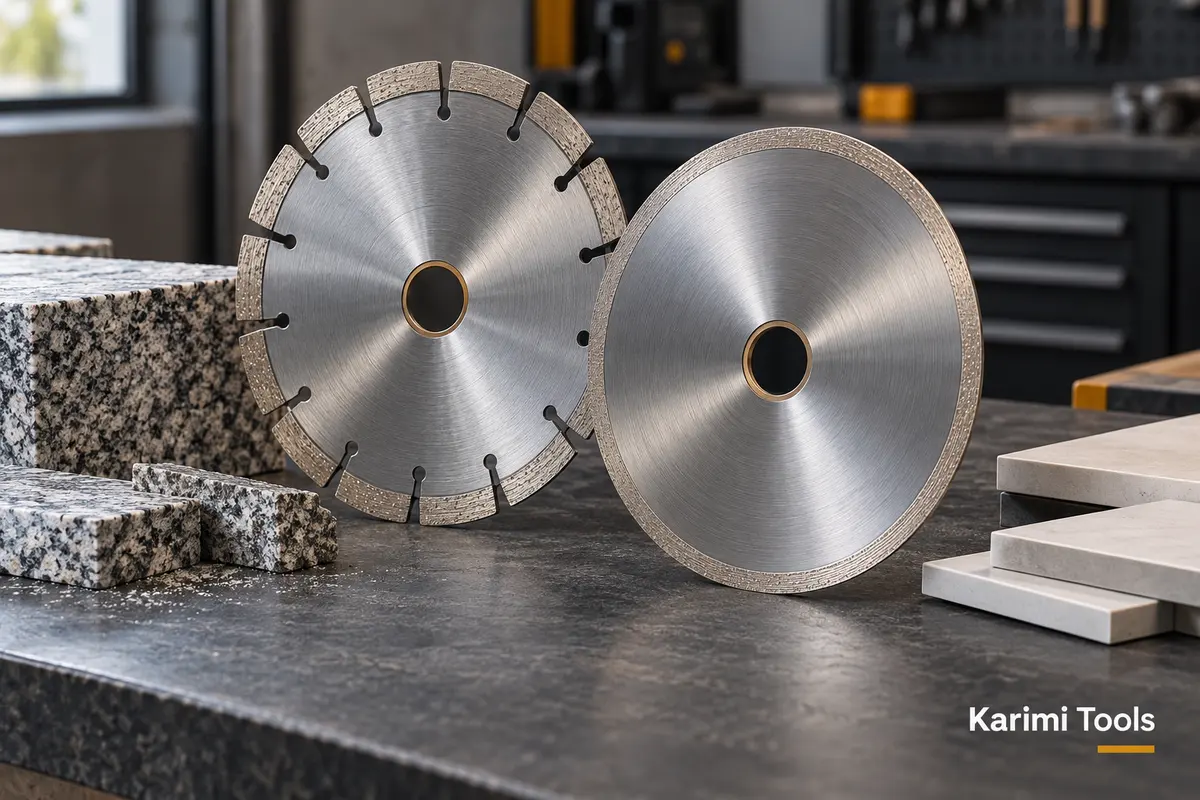
Stone cutting blade: a practical buying guide
A stone cutting blade needs to match a particular material, machine and working method. Diameter is only the beginning of the selection. Identify whether the job involves granite, marble, limestone, ceramic or porcelain, then record thickness and the required edge finish. A tool that fits the spindle is not automatically suitable for the material. This guide provides a purchasing framework rather than a universal promise about cutting speed or blade life.
Start with the actual material
The label “stone” is too broad for a buying decision. Glazed tile, granite and limestone are different jobs. Read the manufacturer’s approved applications and match the named material. Norton lists ceramic-oriented blades and granite-oriented products separately. Use that distinction to ask precise questions, not to assume that one blade works equally well everywhere. Keep a sample or a clear photograph available when discussing an unfamiliar material.
Compare rim types without assuming compatibility
Rim shape is a design clue, not a complete specification. Continuous-rim products can be designed for clean ceramic edges; turbo and segmented designs have their own approved applications. Do not infer porcelain suitability or permission for dry cutting from appearance alone. For an exposed edge, compare a sample cut with the finish you need and the technical information for the exact model.
Check the complete machine connection
Compare outside diameter, bore or mounting system, and the marked operating limit with the machine manual. A larger blade is not acceptable simply because it can be attached: guard clearance and machine capacity also matter. The machine must not exceed the tool’s permitted speed. Disconnect power before changing accessories. Do not compensate for damaged hardware or a mismatched connection with improvised mounting arrangements.
Wet or dry use is a product-specific decision
Use wet cutting only with a tool and machine approved for it. Adding water to an ordinary electrical grinder is not a safe conversion to wet operation. For dry-rated equipment, follow the manufacturer’s working and cooling instructions and arrange appropriate dust control. Include the workshop’s water supply and extraction capability in the purchase decision rather than discovering an incompatibility after the tool arrives.
A practical ordering checklist
Prepare the exact material and thickness, machine model, required diameter and mounting, approved cutting method, and edge-finish expectations. Photographs of the machine plate and the previous accessory can resolve uncertainty. Avoid choosing only by price, treating every material as the same, or overlooking the connection. Compare suitability and supply conditions together; current price and availability need confirmation for the specific item.
Frequently asked questions
Can one blade cover stone and porcelain?
Only if the exact model is approved for both materials. A similar appearance or a broad multipurpose label is not enough.
Why can an edge chip?
Check tool suitability, accessory and machine condition, and workpiece support. A more expensive blade alone is not a confirmed remedy.
Where should I start before ordering?
Start with the stone-blade or porcelain-blade category and have your material and machine details ready for an enquiry.
Related categories and further reading
Manufacturer technical references
For operating details, check the current technical sheet and instructions for the exact model. The cover is an editorial illustration and does not identify a specific commercial product.